South African students funded by NSFAS have received important clarity for the 2026 academic year, with confirmation of a R5,200 allowance scheduled for February. This update is especially relevant for university and TVET college students who rely on monthly support for accommodation, food, and study-related expenses. With payment dates now outlined, students can plan their budgets with more confidence. The announcement reflects NSFAS’s ongoing efforts to improve funding certainty and reduce financial stress for eligible learners across South Africa.

NSFAS R5,200 allowance confirmed for February
The confirmation of the R5,200 allowance brings welcome relief to students preparing for the new academic cycle. According to NSFAS, this payment forms part of the standard support package for qualifying beneficiaries. The funds are intended to cover basic living costs, ensuring students can focus on their studies without constant financial pressure. Clear communication around the allowance helps avoid confusion and misinformation. For many learners, this support represents monthly student support, essential living costs, study expense coverage, and financial stability boost during a critical time of the year.

February 2026 NSFAS payment dates explained
NSFAS has indicated that February 2026 payments will be processed early in the month, aligning with institutional registration and class commencement dates. While exact dates may differ slightly between universities and TVET colleges, most students can expect funds shortly after registration confirmation. Delays usually occur only if documentation is incomplete or banking details are incorrect. Understanding the payment window allows students to plan ahead for rent, transport, and food. This schedule supports early semester planning, on-time disbursements, reduced financial delays, and smoother registrations across campuses.
 School Calendar Shift Confirmed as January Holidays Begin Earlier Across South Africa in 2026
University and TVET students eligibility details
Eligibility for the February 2026 allowance remains linked to NSFAS funding approval and academic registration status. Both university and TVET college students must be fully registered and meet continuing academic progression requirements. NSFAS also emphasizes the importance of updated personal and banking information on its systems. Students who fail to comply may face delayed or withheld payments. Meeting these conditions ensures continued funding access, verified registration status, accurate student records, and uninterrupted allowances throughout the academic year.
What this NSFAS update means for students
This confirmation provides more than just a payment figure; it offers reassurance and predictability. Knowing the allowance amount and timing helps students manage expectations and avoid unnecessary debt at the start of the year. It also reflects NSFAS’s broader goal of improving transparency and accountability in student funding. While challenges may still arise, clear communication is a positive step forward. Overall, the update supports better financial planning, student confidence growth, clear funding timelines, and academic focus support for South African learners.
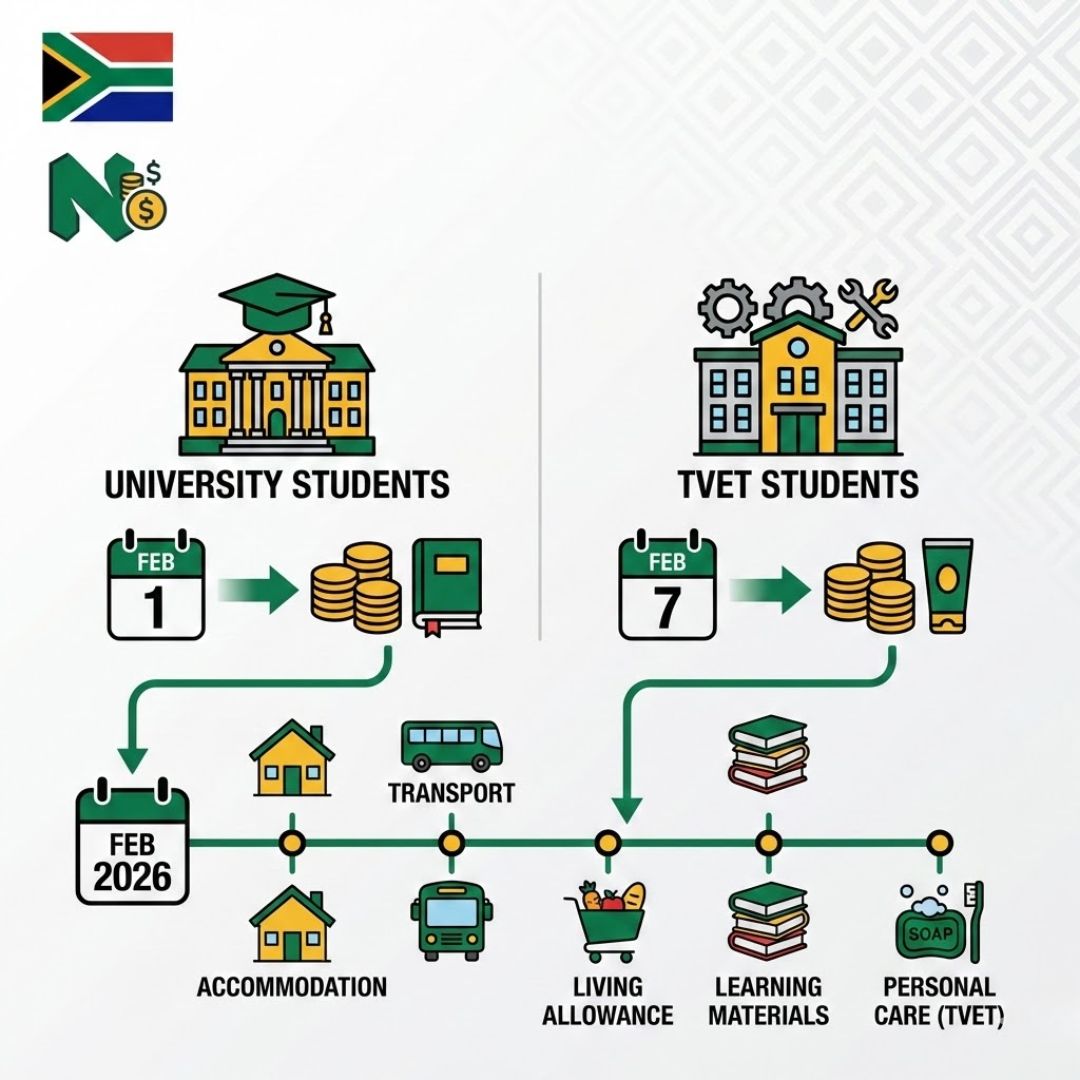
| Category | Details | Applies To |
|---|---|---|
| Allowance Amount | R5,200 | All eligible students |
| Payment Month | February 2026 | University & TVET |
| Expected Payment Period | Early February | Registered students |
| Key Requirement | Confirmed registration | NSFAS beneficiaries |
| Payment Method | NSFAS-approved channels | All institutions |
Frequently Asked Questions (FAQs)
1. Who qualifies for the R5,200 allowance?
Students approved for NSFAS funding and registered at a university or TVET college qualify.

2. When will February 2026 payments be made?
Payments are expected early February, shortly after registration is confirmed.
3. Do university and TVET students receive the same amount?
Yes, eligible students across both institutions receive the confirmed R5,200 allowance.
4. What can delay an NSFAS payment?
Incomplete registration details or incorrect banking information can cause delays.