From 2026, South African drivers will face important changes to licence issuance and renewal rules, prompting fresh warnings from transport authorities nationwide. The updates are designed to improve road safety, reduce fraud, and modernise outdated systems that have caused long queues and repeated backlogs in recent years. While the changes may look administrative on the surface, they affect renewal timelines, testing requirements, and compliance checks that every driver must understand. For motorists across South Africa, staying informed early could mean the difference between smooth renewals and unexpected penalties.

New licence rules bringing nationwide changes
The new licence framework aims to standardise how drivers are assessed and approved, closing gaps that allowed expired or invalid licences to slip through. Authorities are emphasising stricter verification checks, improved identity confirmation, and more consistent testing standards. Drivers will notice updated renewal timelines that reduce grace periods, alongside digital record tracking to limit duplication and fraud. Officials say the reforms encourage responsible driving habits while ensuring records remain accurate. For everyday motorists, this means preparing documents earlier and paying closer attention to official notices.
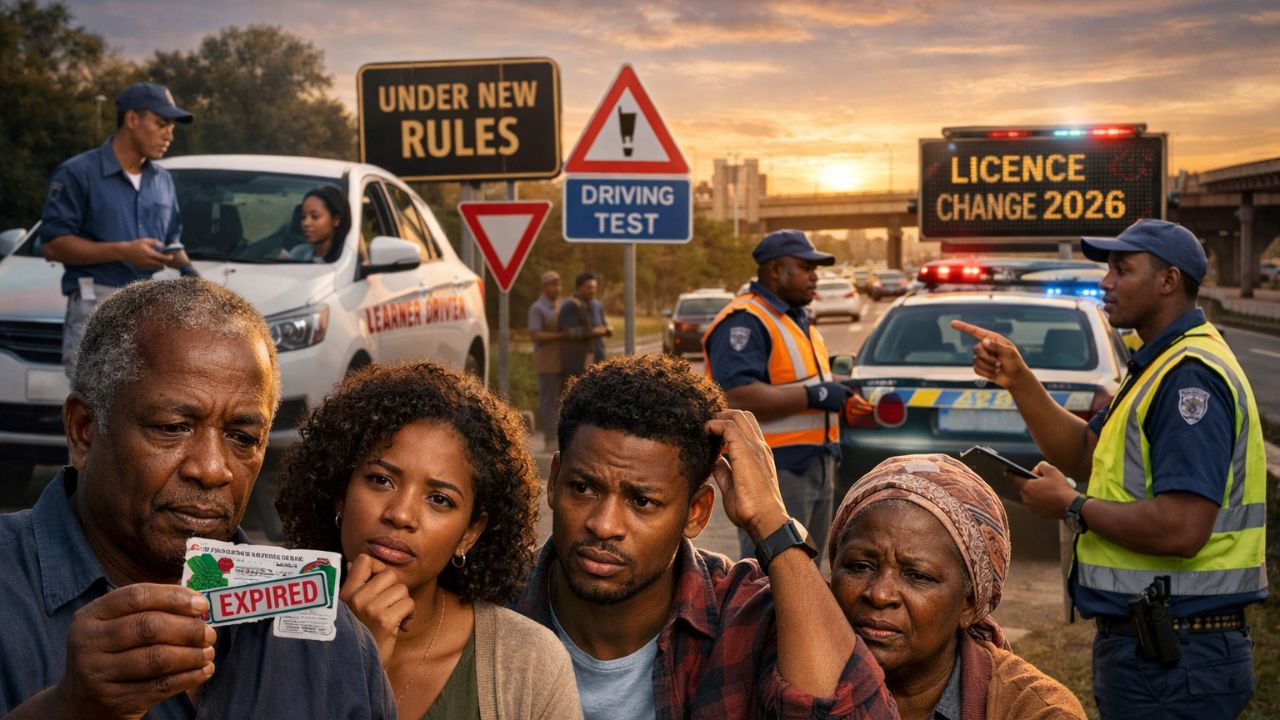
Licence renewal requirements drivers must follow
Renewals under the 2026 rules place more responsibility on drivers to act before deadlines. Missing dates could trigger automatic compliance flags that make late renewals more complicated. Some motorists may also face mandatory eye tests or refreshed medical declarations, depending on licence type. The government is also pushing streamlined booking systems to reduce queues, though demand is expected to surge initially. Overall, the goal is fairer enforcement standards that apply equally across provinces.
 School Calendar Shift Confirmed as January Holidays Begin Earlier Across South Africa in 2026
Warnings issued for South African motorists
Transport departments have issued clear warnings to avoid last-minute renewals once the rules take effect. Drivers ignoring notices risk unexpected renewal delays, fines, or even temporary disqualification. There is also concern about licence validity lapses during peak periods if motorists delay action. Officials recommend early document preparation and regular status checks to stay compliant. These warnings highlight how small oversights can lead to costly legal consequences under the new system.
Summary or Analysis
The 2026 licence and renewal reforms signal a long-term shift toward accountability and efficiency on South African roads. While the transition may feel inconvenient at first, the focus on road safety improvements, system transparency gains, and fraud reduction efforts reflects broader transport goals. Drivers who adapt early are likely to benefit from smoother renewal experiences and fewer surprises. Ultimately, awareness and preparation will be key to navigating these changes without disruption.
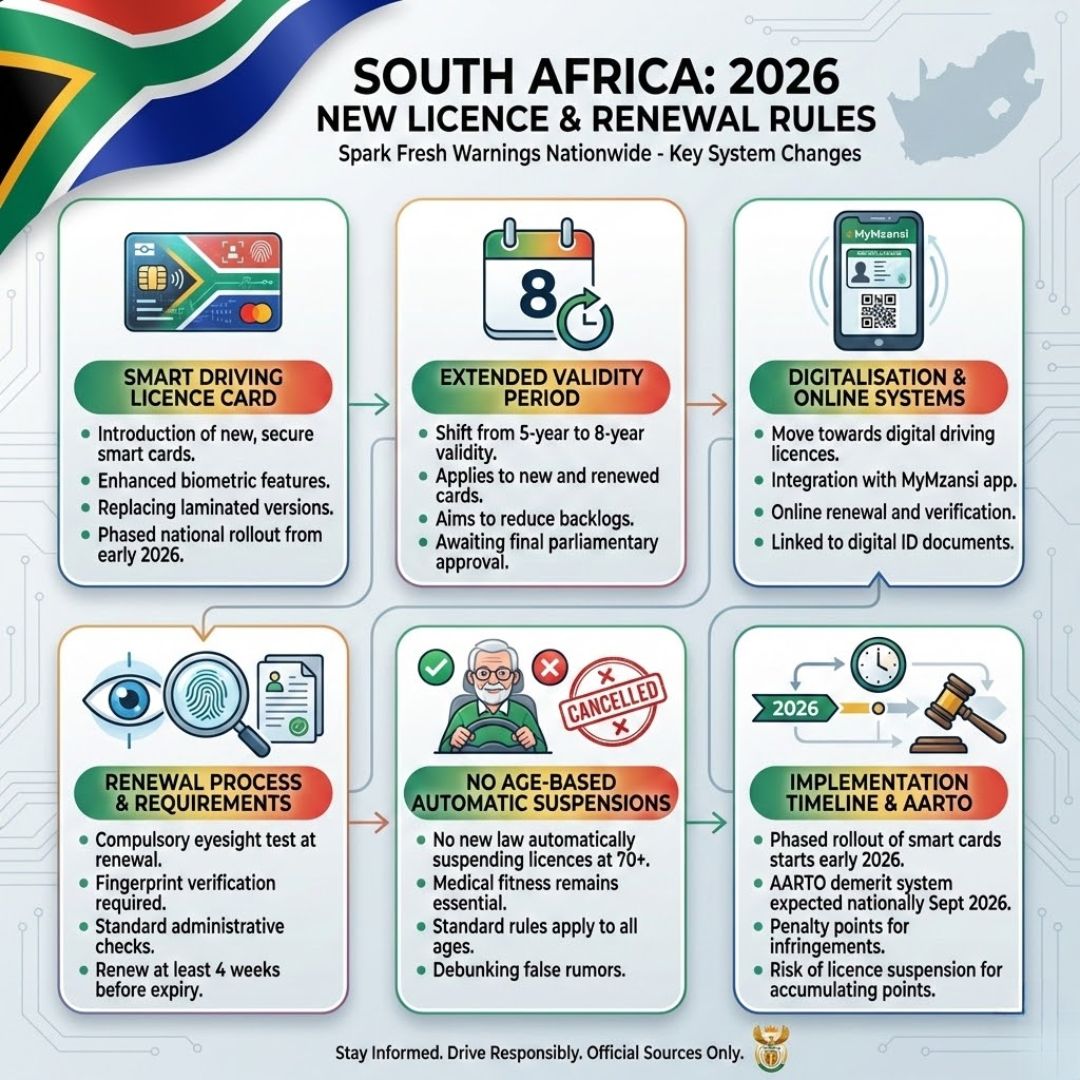
| Rule Area | What Changes in 2026 |
|---|---|
| Renewal Timing | Shorter grace periods and stricter deadlines |
| Verification | Enhanced identity and record checks |
| Testing | Possible additional eye or medical tests |
| System Access | Greater reliance on digital booking platforms |
| Penalties | Higher risk of fines for late compliance |
Frequently Asked Questions (FAQs)
1. When do the new licence rules start?
The updated licence and renewal rules are scheduled to take effect nationwide in 2026.

2. Will all drivers need new tests?
Only certain licence types may require additional eye or medical tests.
3. What happens if I miss my renewal date?
Late renewals could lead to delays, fines, or temporary licence issues.
4. How can drivers prepare in advance?
Check renewal dates early and keep all required documents ready.