The Government Employees Pension Fund (GEPF) has announced a significant policy update that will affect thousands of public servants across South Africa. From 5 February 2026, the official public sector retirement age will increase to 67, marking a major shift in long-standing retirement norms. This change is designed to address longer life expectancy, workforce sustainability, and pension fund stability. While the announcement has sparked debate, it also opens new planning considerations for employees nearing retirement and those still early in their careers.

GEPF retirement age change explained
The newly announced adjustment means that qualifying public sector employees will remain in active service until age 67 unless they opt for earlier retirement under existing provisions. According to GEPF, the decision reflects longer working lives, evolving economic realities, and the need for pension system stability. Many employees are now reassessing career timelines, especially those who had planned exits at 60 or 65. The fund emphasizes that this move supports retirement income security while allowing experienced professionals to continue contributing valuable skills. Importantly, the change applies prospectively, giving members time for financial planning adjustments before the new rule takes effect.

How public sector workers are affected
For current employees, the shift to a 67 retirement age may influence promotion paths, workload expectations, and long-term benefits. Workers closer to retirement may consider transitional options such as early exit choices or phased retirement where available. Younger employees, meanwhile, could benefit from extended contribution years, potentially improving final pension outcomes. Unions have raised questions about health and capacity concerns for older workers, especially in physically demanding roles. GEPF has stated that department-specific policies and existing safeguards will help ensure fair workforce treatment across different job categories.
 School Calendar Shift Confirmed as January Holidays Begin Earlier Across South Africa in 2026
Why South Africa is raising retirement age
South Africa joins a growing list of countries adjusting retirement ages to keep pace with demographic and economic shifts. Rising life expectancy and increased pressure on pension systems have made age threshold reforms more common globally. GEPF notes that retaining skilled workers supports institutional knowledge retention and reduces sudden staffing gaps. From a fiscal perspective, longer employment helps balance fund sustainability goals by extending contribution periods. While not without challenges, policymakers argue the move aligns with global retirement trends and long-term public finance planning.
Summary and practical implications
The move to a 67 retirement age represents a structural change that will reshape public sector career planning in South Africa. Employees are encouraged to review benefit statements, seek advice, and reassess timelines in light of updated retirement rules. While some may feel uncertain, others see opportunities for income continuity and skills development later in life. The key takeaway is preparation: understanding options, monitoring policy updates, and aligning personal goals with future workforce policies will help employees navigate this transition more confidently.
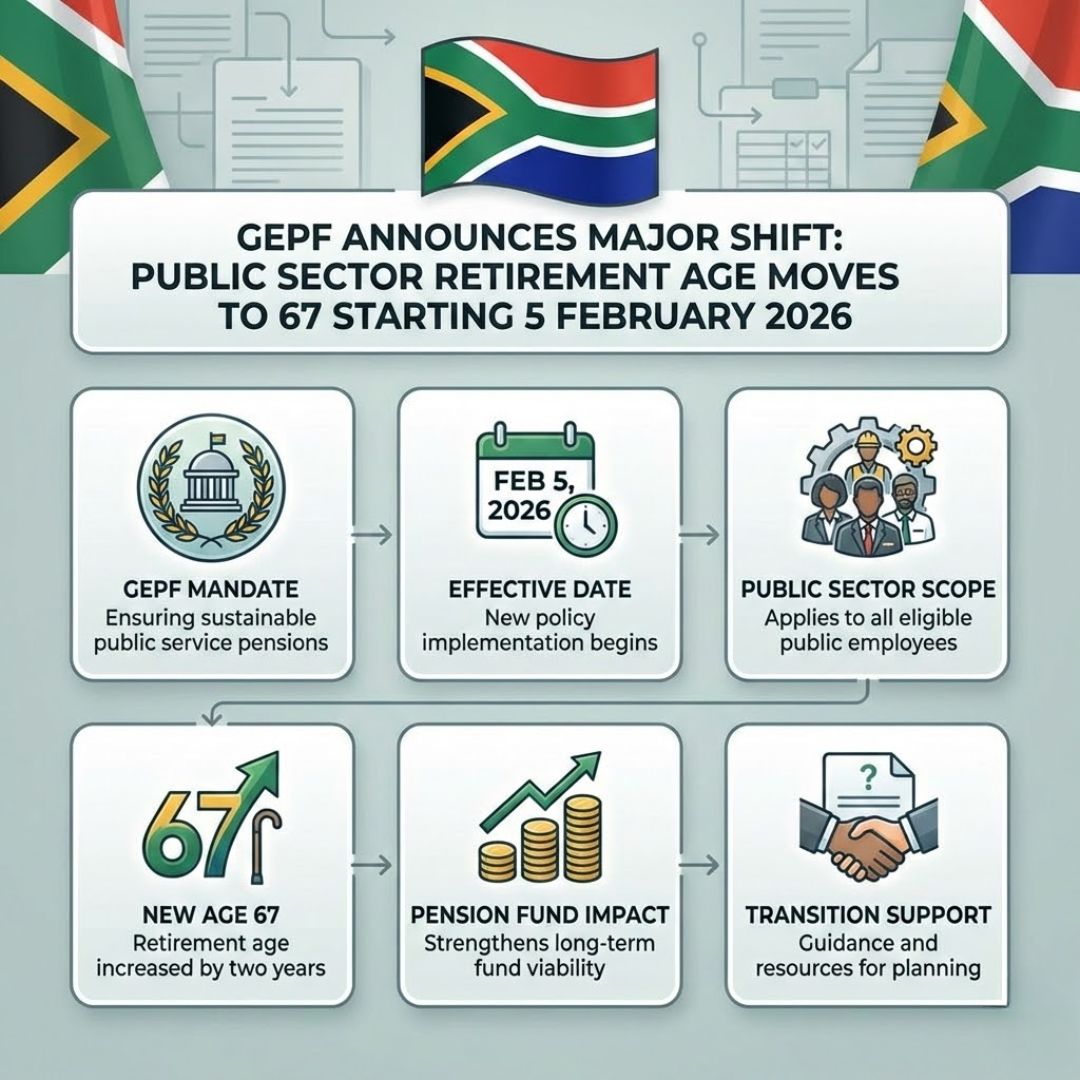
| Aspect | Details |
|---|---|
| New Retirement Age | 67 years |
| Effective Date | 5 February 2026 |
| Who Is Affected | Public sector employees under GEPF |
| Early Retirement | Still allowed under existing rules |
| Main Objective | Pension fund sustainability |
Frequently Asked Questions (FAQs)
1. When does the new GEPF retirement age start?
The new retirement age takes effect from 5 February 2026.

2. Does this apply to all public servants?
It applies to employees covered by the Government Employees Pension Fund.
3. Can employees still retire earlier?
Yes, early retirement options remain available under current GEPF rules.
4. Will pensions increase because of this change?
Longer service may improve benefits, but outcomes depend on individual contributions.